



Speak to an expert.
Get fast, honest guidance from our in house subject matter experts, specialists and engineers. Whether you need technical clarity or buying confidence, we’ll help you make the right choice for your business.

Discover


Discover


INTEL Xeon E3 Series processors are legacy enterprise and workstation CPUs engineered to deliver strong single core performance, platform stability, and ECC memory support for small scale servers and professional desktops. Designed for predictable operation and long duty cycles, the
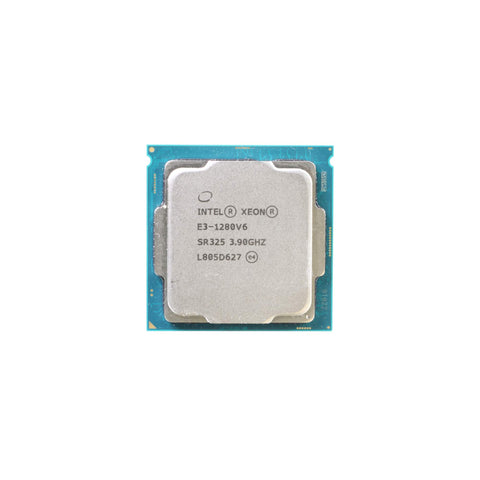
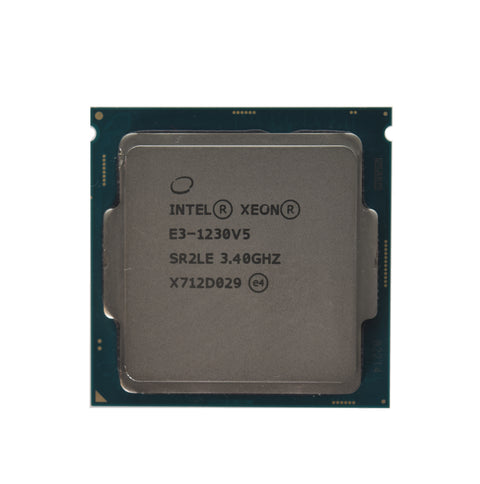
INTEL Xeon E3 Series processors are legacy enterprise and workstation CPUs engineered to deliver strong single core performance, platform stability, and ECC memory support for small scale servers and professional desktops. Designed for predictable operation and long duty cycles, the Xeon E3 line formed the foundation of many entry level enterprise deployments. Within refurbished enterprise infrastructure, INTEL Xeon E3 Series processors continue to provide a dependable compute base for compatible platforms.
SCOPE
The Xeon E3 Series sits within the broader INTEL CPUs and processors portfolio and is widely deployed across older generation
servers and professional
workstations. These processors are commonly found in tower and compact systems and represent the predecessor to the modern
Xeon E Series. Xeon E3 platforms remain in service where platform compatibility and cost effective upgrades are priorities.
ARCHITECTURE & PERFORMANCE
INTEL Xeon E3 processors are engineered around high clock speed architectures with modest core counts, ECC memory support, and mature chipset compatibility. This design delivers strong responsiveness for lightly threaded workloads while maintaining stability under sustained operation. Real world performance is shaped by configuration choices including ECC
memory, reliable
storage, and standard
networking. The architecture prioritises per core performance and platform reliability over parallel scalability.
USE CASES
Xeon E3 Series processors are commonly used for small business servers, branch office infrastructure, file and application servers, and professional desktop workloads. They are well suited to environments running steady, predictable workloads such as domain services, light virtualisation, CAD, and software development. Additional roles include edge systems and legacy platform support where hardware compatibility is essential.
SELECTION GUIDANCE
Selecting a Xeon E3 processor is appropriate where compatibility with existing platforms, ECC support, and strong single core performance are key requirements. These CPUs suit organisations maintaining older infrastructure or sourcing cost effective replacement components. Buyers may also evaluate newer alternatives such as the Xeon E Series when planning platform refreshes.
REFURBISHMENT & ASSURANCE
Refurbished INTEL Xeon E3 Series processors supplied by Bytestock are professionally tested and validated to meet enterprise reliability standards. Each processor undergoes inspection, functional testing, and sustained load verification to ensure stable operation. Supported by warranty and quality assurance, refurbished Xeon E3 CPUs reduce procurement risk while extending the usable life of legacy enterprise compute hardware, delivering dependable performance with clear sustainability benefits.
Our company site and online shop are now one website. Research, configure and buy refurbished enterprise IT hardware in one place, with a new server configurator, spare-parts finder and the...

AI workloads demand faster, more specialised infrastructure. Learn how artificial intelligence is reshaping enterprise hardware and what to look for when building AI-ready systems.

Moving offices soon? Discover the five most common IT mistakes businesses make during office relocations and how a simple checklist can help you avoid downtime.

NVIDIA A100 vs H100 explained. Learn the key differences in architecture, AI performance, and real-world use cases to choose the right data centre GPU for your workloads.

Is your IT procurement strategy costing more time and money than it should? Learn how a procurement productivity scorecard helps optimise spend, improve efficiency, and reduce operational risk.

Server capacity planning helps businesses forecast demand, optimise performance, and scale infrastructure without disruption. Learn how monitoring, forecasting tools, and refurbished hardware support reliable, cost-effective growth.
